


5 Successful Leadership Skills for Managers in Organizations


Jana Saab
Leadership skills are as important as technical skills. Strong leaders demonstrate excellent communication, listening, and problem-solving skills.
If you are a leader or aspire to be in this position, such skills are necessary to cultivate an organizational and healthy work environment to help in the success process of your organization.
The Great Place To Work® Trust Index© Survey showed that 90% of the respondents in successful companies believe that their managers are trustworthy and have leadership qualities.
Therefore, this article investigates the five optimal leadership skills for successful managers in organizations.

Mastering emotional intelligence
Controlling your emotions and understanding the employees’ intentions are essential to ensure effective communication with the team. Indeed, managing stress and making logical decisions are the cornerstones of setting suitable plans.
Furthermore, being an active listener helps you gather ideas and perspectives from employees with various backgrounds and acknowledge their emotions. Hence, this creates a harmonious work environment.
Having strong communication skills
As a leader, you need to clearly explain your vision, mission, and plans to your employees. Thus, verbal and non-verbal communication skills are significant here. Additionally, they should know the types of tasks that they want to work on. All forms of communication, such as one-way, two-way, email, phone calls, social media, etc., show remarkable leadership skills.
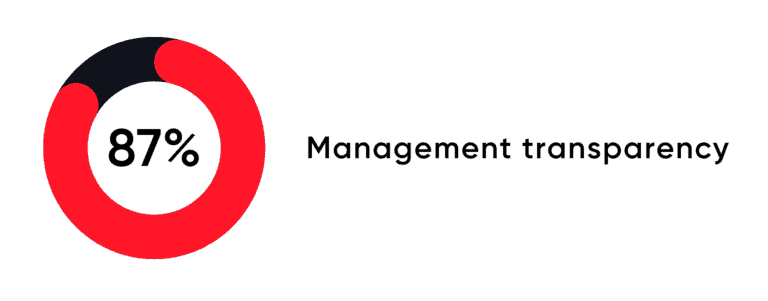
To foster efficient communication, leaders should be clear and inform their staff members about the changes and updates that occur in the organization. Moreover, when management is transparent with its employees, this enhances loyalty, trust, and creates a sense of belonging. Accordingly, 87% of the employees at the best workplaces in KSA replied that their management is transparent with them based on the Great Place to Work® Trust Index© Survey.

Ensuring flexibility
Flexibility enhances employees’ productivity. Being open-minded enough to accept any new idea is an important key for a manager at the organization. Leadership also lies in coping with the new changes and developing solutions that meet the goals of the workplace. They always look forward to innovative and creative ideas that boost the work. To make this happen, organizations should train their managers by establishing mentorship and leadership programs.
Empowering employees with motivation
Leaders are the source of inspiration for their employees to achieve great milestones. For example, managers can offer them awards to celebrate their accomplishments. For further illustration, when employees are recognized and treated fairly, this escalates enthusiasm. Providing opportunities for development by implementing workshops is an added value as well.
Establishing strategic thinking
A strategic and reasonable way of thinking is highlighted when setting present and future goals and expectations to drive success for the organization. Among their strategies, smart leaders include the predicaments that they may face and enable employees to suggest comprehensive solutions.
Master great leadership!
In conclusion, by adopting these strategies and understanding the role of leadership in organizational culture, managers can develop strong cultural and communication bonds with their employees and increase employee satisfaction. Great Place to Work® helps you survey your employees to receive the right insights that let you improve your workplace culture.
Get your company Certified™️

A Guide Into Creating A Great Workplace Culture in Egypt
Creating a Great Workplace Culture Starts with Trust A positive workplace culture impacts every aspect of a business from employee engagement and retention to innovation and employer

The Vision 2030 Risk Nobody Is Putting on the Dashboard
Saudi Arabia has done the hard part of the talent story in record time. The harder part is only starting, and it does not show

Servant Leadership: How It Builds High-Trust Cultures
We all can recall what a great leader made us feel once. Whether it is the extended compassion during moments of stress or simply listening a little more attentively

The Great Place To Work® Effect: What Happens When Trust Becomes Culture
There are companies where people do what is necessary to get the job done. And there are others where people get involved, propose ideas, adapt

Building Trust at Scale: Inside AmiViz’s Workplace Culture
Trust as a Daily Practice at AmiViz At AmiViz, trust is not treated as a policy or a one‑time initiative. It is built every day—through conversations, decisions, and the way people

How UDST Became One of Qatar’s Best Workplaces™
At the University of Doha for Science and Technology (UDST), being named among the Best Workplaces in Qatar™ 2026 is not just a recognition, it is a reflection of years